
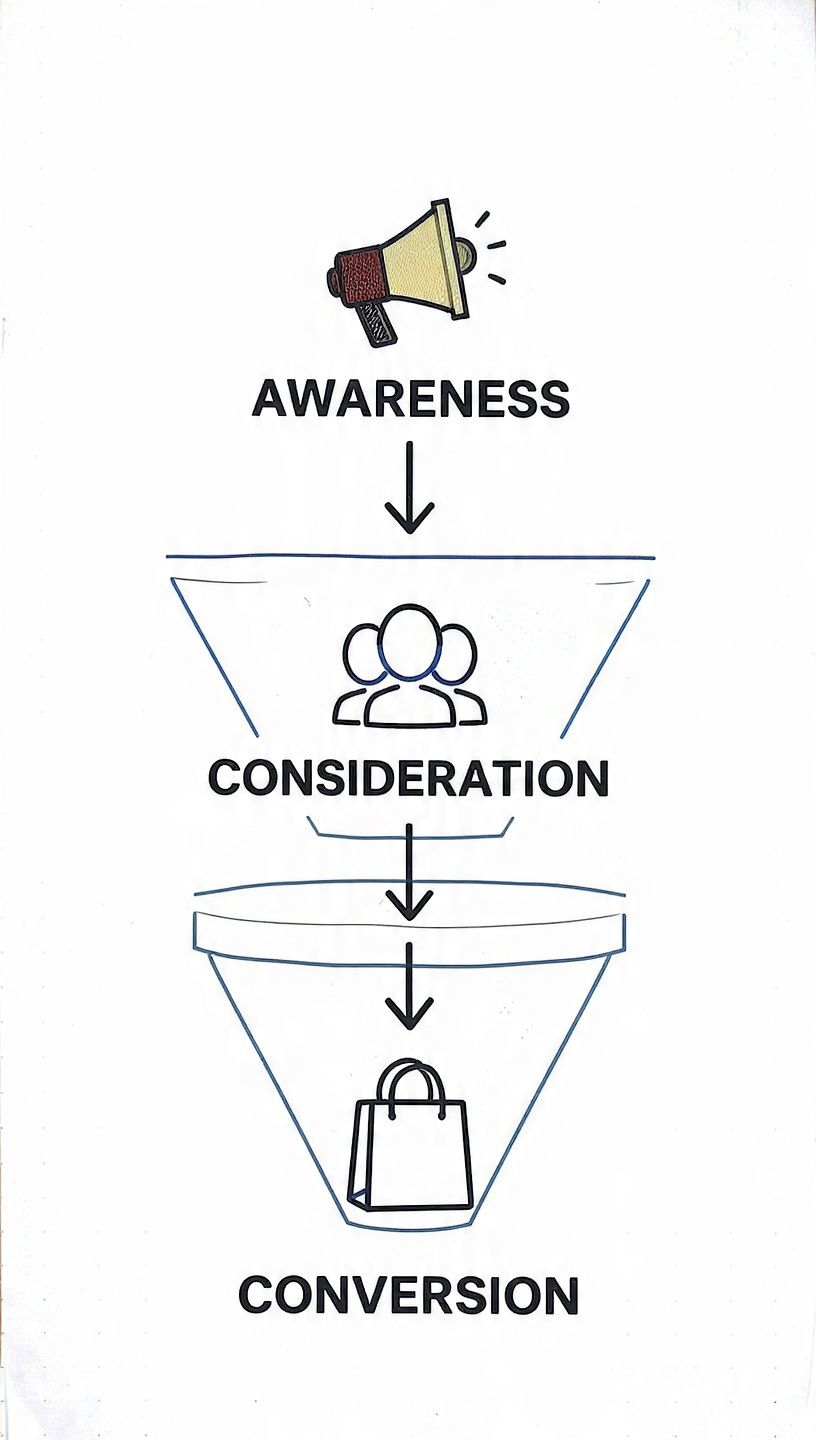
 The traditional marketing funnel-awareness, consideration and conversion has guided marketers for decades. But in today’s age fast moving digital landscape, powered by artificial intelligence (AI), that linear model is rapidly evolving. AI isn’t just improving the funnel; it’s reshaping it into something smarter, faster, and far more personalised.
The Shift from Linear to Dynamic Funnels
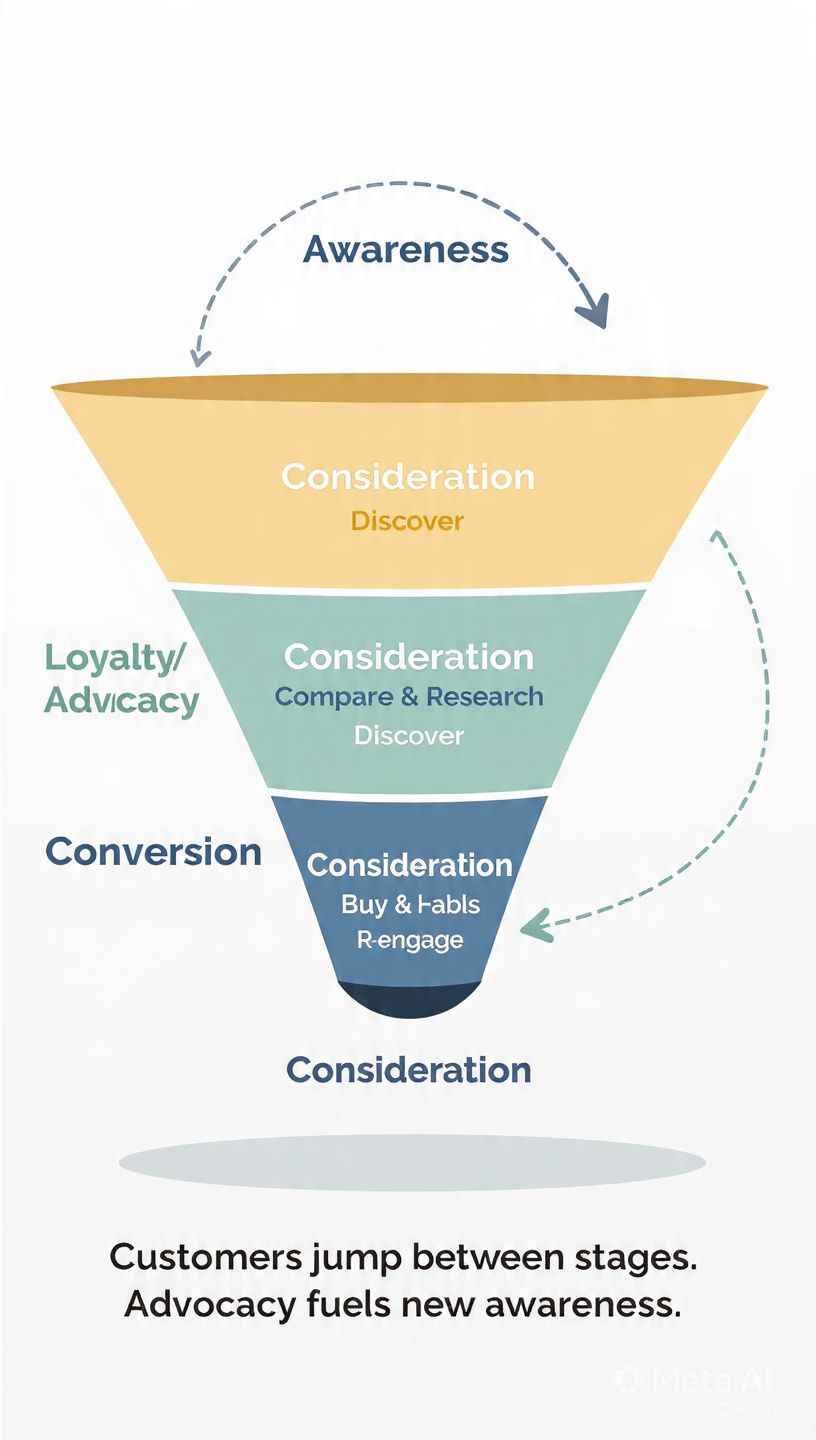 In the past, customers followed a predictable journey: they discovered a product, researched it, and then made a purchase. Today, that journey is anything but linear. Consumers jump between channels, revisit decisions, and expect instant, relevant interactions.
AI enables marketers to respond to this complexity in real time. Instead of forcing users through a rigid funnel, AI creates dynamic pathways that adapt based on behavior, preferences, and intent.
Personalisation at Scale
One of AI’s biggest contributions is the ability to deliver highly personalized experiences to thousands—or even millions—of users simultaneously. By analyzing data such as browsing history, past purchases, and engagement patterns, AI can tailor content, product recommendations, and messaging for each individual.
This level of personalization increases engagement and builds stronger connections with customers, making them more likely to move through the funnel.
Smarter Lead Generation and Qualification
AI-powered tools can identify high-quality leads faster and more accurately than traditional methods. Instead of relying on basic demographics, AI evaluates behavioral signals, such as how users interact with your website or emails.
This means businesses can focus their efforts on prospects who are most likely to convert, improving efficiency and reducing wasted resources.
Predictive Analytics and Decision-Making
AI doesn’t just analyze past behavior—it predicts future actions. Predictive analytics allows marketers to anticipate customer needs, identify trends, and optimize campaigns before issues arise.
For example, AI can forecast which leads are most likely to convert or which customers are at risk of dropping off, enabling proactive engagement.
Automation That Enhances, Not Replaces
Automation is a key part of AI’s role in the funnel, but it’s not about replacing human marketers. Instead, it frees up time by handling repetitive tasks such as email campaigns, ad optimization, and customer segmentation.
This allows marketers to focus on strategy, creativity, and building meaningful relationships with their audience.
The Rise of Conversational Marketing
AI-powered chatbots and virtual assistants are transforming how brands interact with customers. Instead of waiting for users to fill out forms or navigate complex websites, businesses can engage them instantly through real-time conversations.
A Continuous Loop, Not a Funnel
These tools guide users through the funnel, answer questions, and even help complete purchases—creating a smoother and more engaging experience.
Perhaps the biggest change AI brings is turning the funnel into a continuous loop. Customer journeys no longer end at conversion. Post-purchase engagement, retention, and loyalty are just as important.
AI helps businesses stay connected with customers through personalized follow-ups, recommendations, and support, encouraging repeat purchases and long-term relationships.
Conclusion
AI is not just redefining the marketing funnel—it’s reinventing it. By making it more dynamic, personalized, and data-driven, AI empowers businesses to better understand and serve their customers at every stage of their journey.
As technology continues to evolve, marketers who embrace AI will be better positioned to stay ahead of the competition and deliver experiences that truly resonate.
The future of digital marketing isn’t just about guiding customers through a funnel—it’s about creating intelligent, adaptive journeys that evolve with them.